
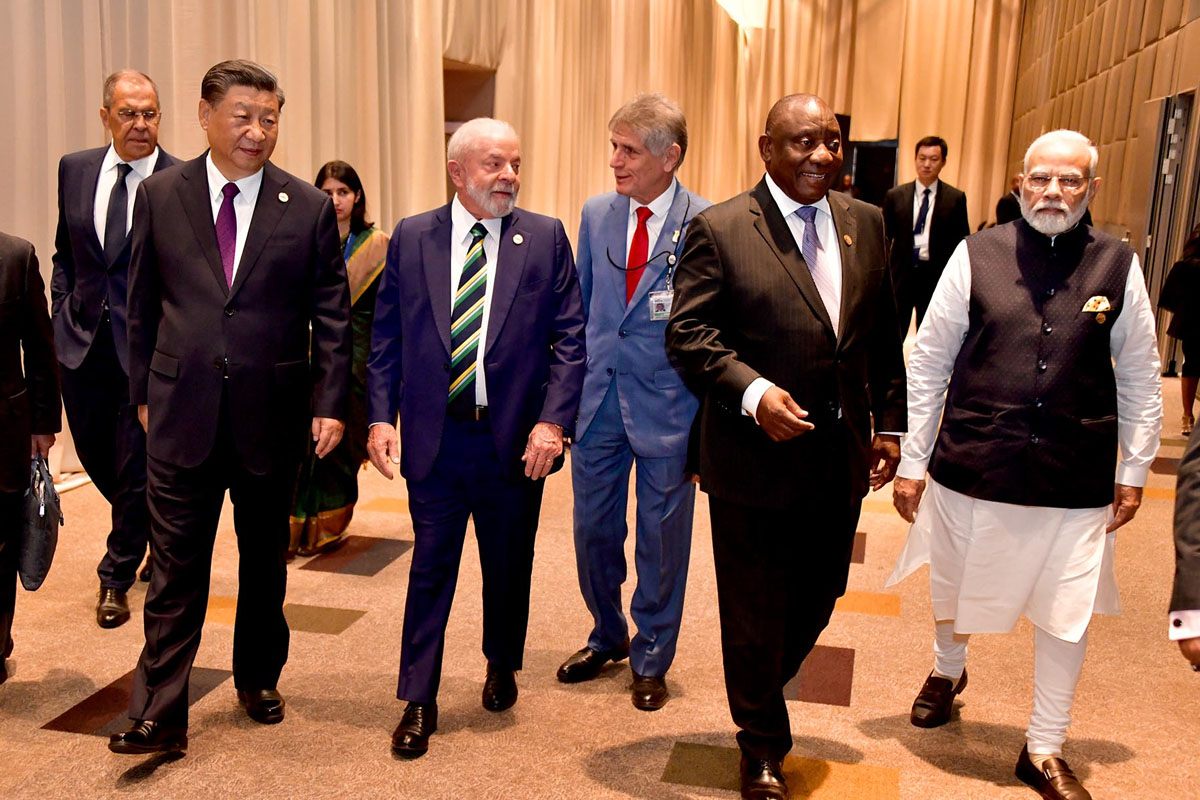
The BRICS group is a coalition of five emerging economies that have been cooperating and coordinating on various issues of global importance. The group consists of Brazil, Russia, India, China, and South Africa. The acronym BRICS was coined in 2001 by Jim O’Neill, a former Goldman Sachs economist, who predicted that these countries would become the dominant economic forces in the 21st century.
The BRICS group has achieved some notable successes in its cooperation and coordination on various issues. However, the group also faces some challenges that may affect its future prospects and relevance. In this blog post, we will explore some of the achievements and challenges of the BRICS group and how they are shaping the world.
Achievements of the BRICS Group
Some of the achievements of the BRICS group are:
The New Development Bank (NDB)
The New Development Bank (NDB) is a multilateral development bank established by the BRICS countries in 2014 to support infrastructure and sustainable development projects in the BRICS countries and other developing countries. The NDB has its headquarters in Shanghai, China, and regional offices in Johannesburg, South Africa; São Paulo, Brazil; GIFT City, India; and Moscow, Russia. The NDB has an initial authorized capital of $100 billion and an initial subscribed capital of $50 billion. The NDB operates on the principle of equal voting rights and no veto power for any member. The NDB has approved 96 projects worth $32.8 billion as of December 2022.
The NDB is a significant achievement for the BRICS group as it demonstrates their ability to create an alternative source of financing for development that is more responsive to their needs and priorities. The NDB also aims to promote innovation, transparency, accountability, and environmental and social standards in its operations.
The BRICS Contingent Reserve Arrangement (CRA)
The BRICS Contingent Reserve Arrangement (CRA) is a framework for the provision of support through liquidity and precautionary instruments in response to actual or potential short-term balance of payments pressures. It was established in 2015 by the BRICS countries with an initial size of $100 billion. The CRA aims to provide protection against global liquidity pressures, such as currency issues where members’ national currencies are being adversely affected by global financial pressures. The CRA also seeks to complement existing international arrangements, such as the IMF, by providing additional financial resources.
The CRA is another achievement for the BRICS group as it shows their willingness and capacity to cooperate on financial and monetary matters. The CRA also reflects their desire to reduce their dependence on the IMF and other Western-dominated institutions that may impose conditionalities or restrictions on their policies. The CRA also enhances their financial stability and resilience in times of crisis.
The BRICS Payment System
The BRICS Payment System is an initiative to develop a common platform for cross-border payments among the BRICS countries. It was launched in 2019 by the central banks of Brazil, Russia, India, China, and South Africa. The BRICS payment system aims to reduce transaction costs, increase efficiency, enhance security, and promote financial inclusion among the BRICS countries. The BRICS payment system also aims to reduce dependence on SWIFT, which is dominated by Western countries.
The BRICS payment system is a recent achievement for the BRICS group as it demonstrates their ability to innovate and collaborate on digital and technological matters. The BRICS payment system also signals their intention to challenge the existing global payment system that is controlled by a few countries and institutions. The BRICS payment system also creates more opportunities for trade and investment among the BRICS countries and other developing countries.
The BRICS Expansion
The BRICS expansion is an initiative to invite more countries to join the group as full members. It was announced in 2023 by the BRICS leaders at their 15th summit in Beijing, China. The BRICS expansion aims to increase the representation and voice of emerging economies and developing countries in global affairs. The BRICS expansion also aims to strengthen the cooperation and solidarity among the BRICS countries and their partners.
The BRICS expansion is a bold achievement for the BRICS group as it shows their ambition and confidence to become a more influential and effective actor in global affairs. The BRICS expansion also reflects their recognition and appreciation of the diversity and potential of other countries that share their vision and values. The BRICS expansion also creates more possibilities for dialogue and collaboration among the BRICS countries and other regions.
Challenges of the BRICS Group
Despite its achievements, the BRICS group faces several challenges. Some of the challenges of the BRICS group are:
The diversity and divergence of interests among the members
The BRICS countries have different political systems, economic models, development levels, regional roles, and global aspirations. These differences may lead to conflicts or disagreements on some issues, such as human rights, democracy, trade, security, and climate change. For example, China and India have a longstanding border dispute that flared up in 2020 and 2021. Brazil and South Africa have expressed concerns about China’s trade practices and its growing influence in their regions. Russia and China have divergent views on the role of the UN and the reform of the Security Council. These differences may limit the scope and depth of cooperation among the BRICS countries and undermine their solidarity and cohesion.
The competition and rivalry with other powers
The BRICS countries face competition and rivalry from other major powers, such as the US, the EU, Japan, and Australia. These powers may perceive the BRICS group as a challenge or a threat to their interests and influence in the global arena. They may also try to counter or contain the rise of the BRICS countries by forming alliances or partnerships with other countries or regions. For example, the US has launched the Quad initiative with Japan, India, and Australia to promote a free and open Indo-Pacific region.
The EU has proposed a strategic partnership with India to enhance cooperation on trade, security, climate change, and digital transformation. Japan has expanded its economic ties with Africa through the Tokyo International Conference on African Development. These initiatives may reduce the space and opportunities for the BRICS countries to exert their influence and leadership in the world.
Another challenge facing the BRICS group is the ongoing COVID-19 pandemic. The pandemic has had a severe impact on the economies of member countries. According to the International Monetary Fund (IMF), the combined GDP of BRICS countries are expected to contract by 3% in 2020. The pandemic has also disrupted global supply chains and trade flows, which has had a negative impact on intra-BRICS trade.
These are some of the main challenges that the BRICS group faces in its quest to become a more influential and effective actor in global affairs.
Future Prospects
Despite these challenges, the BRICS group has a bright future ahead. The group has made significant progress in promoting economic cooperation and development among its members. With the establishment of institutions such as the NDB and CRA, member countries have a platform to work together on issues related to infrastructure development and financial stability.
Looking ahead, there are several areas where the BRICS group can focus its efforts. One area is digitalization. With rapid advancements in technology, digitalization has become an important driver of economic growth. By working together on issues related to digitalization, member countries can unlock new opportunities for growth and development.
Another area where the BRICS group can focus its efforts is sustainable development. With increasing concerns about climate change and environmental degradation, there is a growing need for sustainable development practices. By working together on issues related to sustainable development, member countries can promote environmentally friendly practices and ensure long-term economic growth.
Conclusion
In conclusion, the BRICS group has made significant progress over the years in promoting economic cooperation and development among its members. Despite facing several challenges along the way, member countries have remained committed to working together on issues related to infrastructure development, financial stability, trade, and investment. With a bright future ahead, there are several areas where member countries can focus their efforts to ensure long-term economic growth and prosperity.
Don’t miss out on the BRICS boom. Stay updated on the latest news and insights. Let Haqiqa Global Business help you navigate this exciting market.
Discover more from Haqiqa Global Business
Subscribe to get the latest posts sent to your email.
 Haqiqa Global Business
3 Replies to “BRICS: Achievements, Challenges, and Future Prospects”